How to Transfer an Embroidery Pattern onto Fabric (4 Easy Ways)
Tracing, stick-and-stitch stabilizer, transfer paper and iron-on transfers, and how to choose the right one for your fabric.

Hand embroidery for beginners
Friendly, step-by-step lessons, clear stitch diagrams and project ideas for personal gifts, new babies, weddings and your church family.
Pay what you want, even $0. 18 pages with printable patterns.
A hoop, fabric, floss, needles, scissors and a marking pen. That is all you need.
See the beginner list →Start with running stitch and backstitch. Each stitch has a numbered diagram.
Open the stitch library →The Spring Wreath uses six stitches and makes a lovely first piece to keep or give.
See the pattern →Stitch library
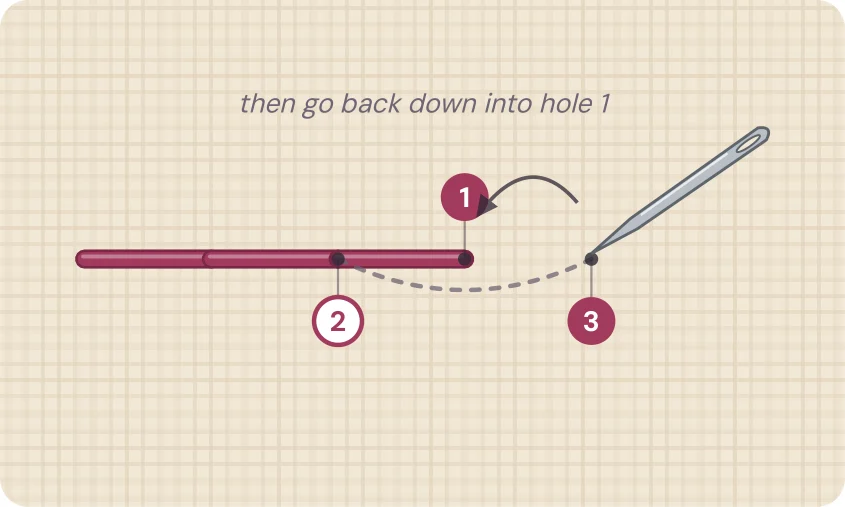 Line stitchesBackstitchFor crisp outlines and lettering
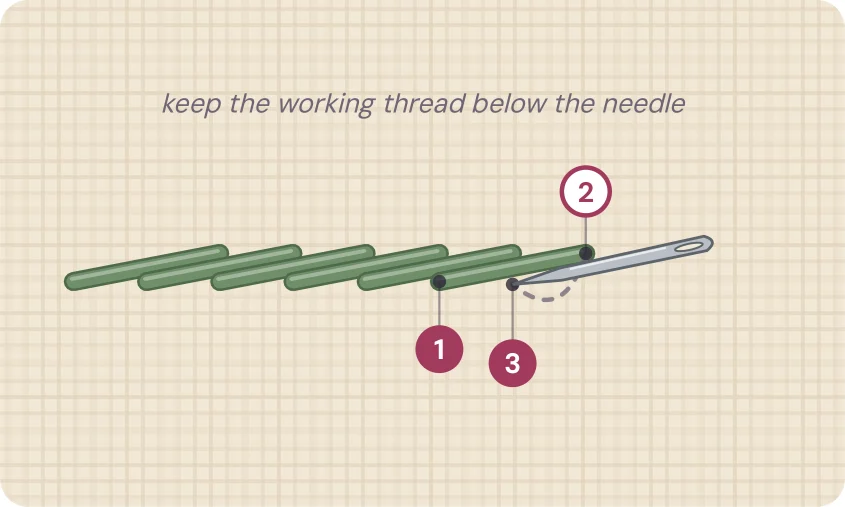 Line stitchesStem stitchFor flower stems, vines, and curving lines
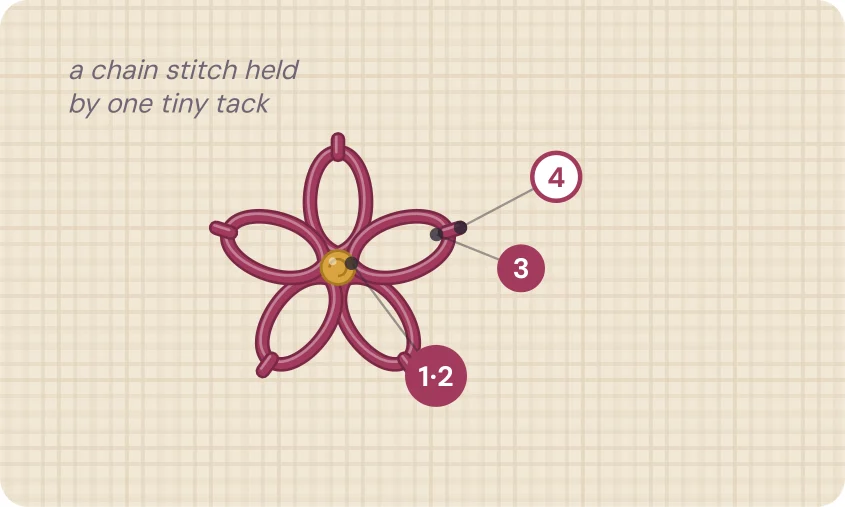 Loops & knotsLazy daisyFor petals and small leaves
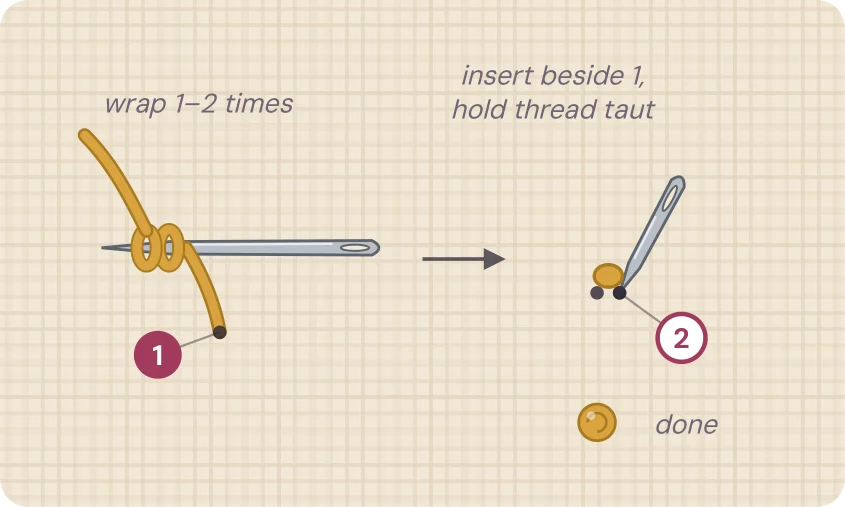 Loops & knotsFrench knotFor flower centers, dots, and texture
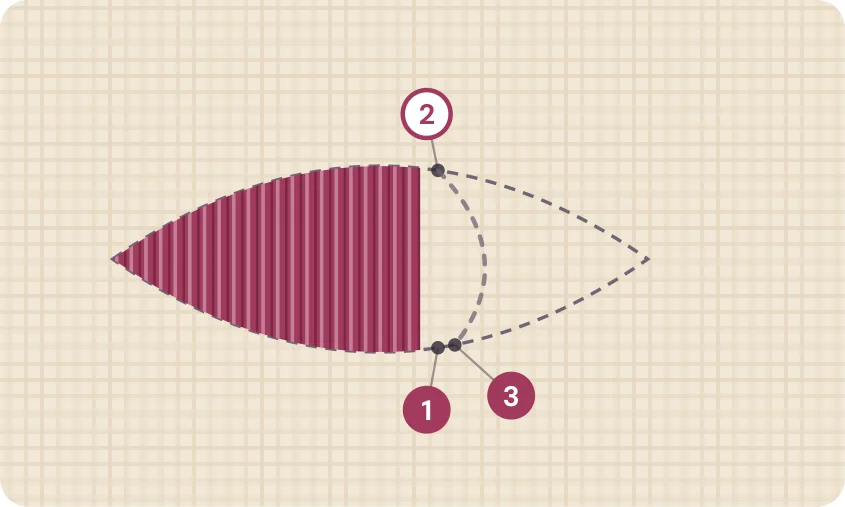 Filling stitchesSatin stitchFor smooth, solid fills in small shapes
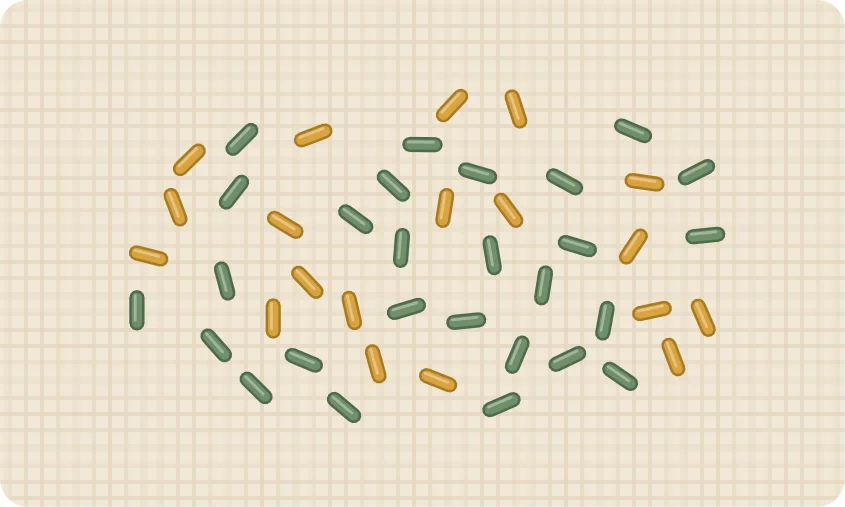 Filling stitchesSeed stitchFor speckled texture and light fills
Project ideas
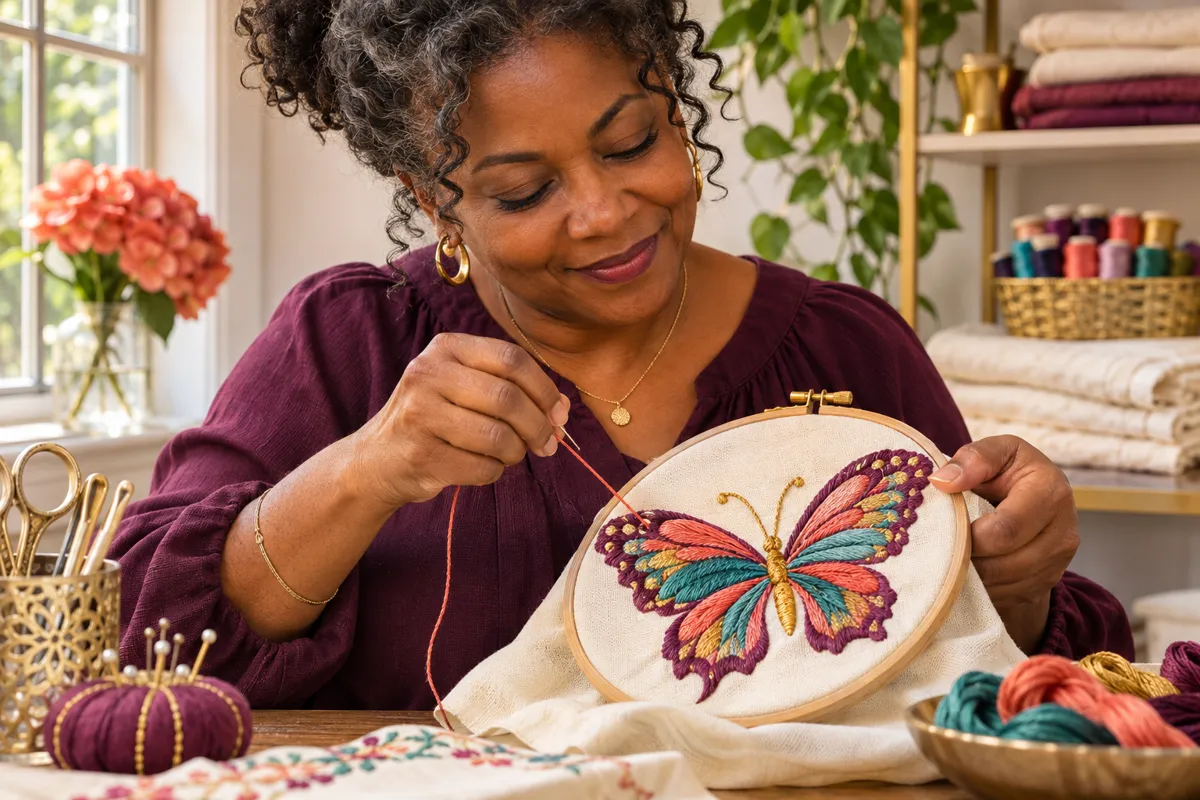
Mood image (illustration)
Why hand embroidery
Hand embroidery needs very little equipment, mistakes can be unpicked, and simple stitches look lovely together in a hoop. It is a craft you can pick up in a quiet half hour and carry anywhere.
Learn
Tracing, stick-and-stitch stabilizer, transfer paper and iron-on transfers, and how to choose the right one for your fabric.
Why tight, woven cotton and linen are easiest, plus how to stitch on towels, knits, satin and canvas.
How to separate six-strand floss, how many strands to use for each look, and how to choose the right needle.
Free download
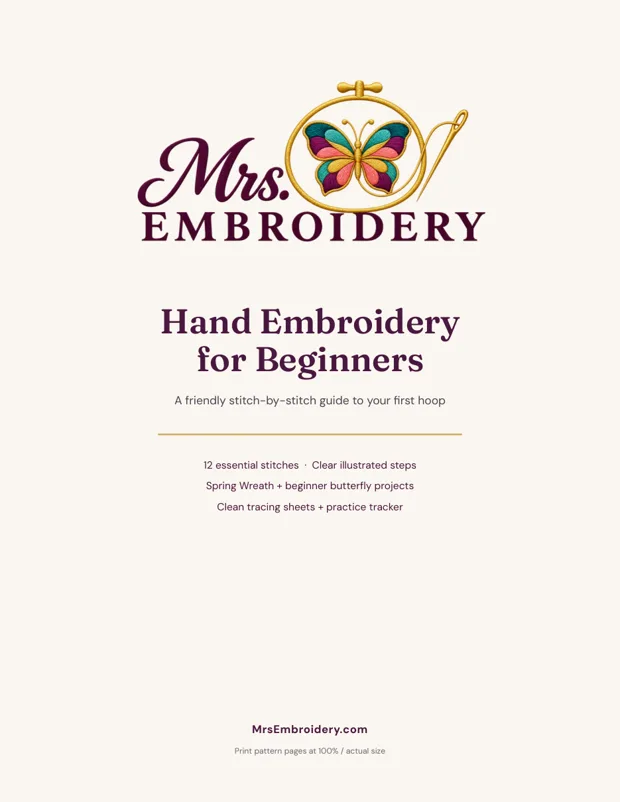
18 illustrated pages: 12 essential stitches, the Spring Wreath and butterfly projects, clean tracing sheets and a printable practice tracker. Pay what you want, even $0.